All this love
Good news. Turns out we have an infinite capacity for love.

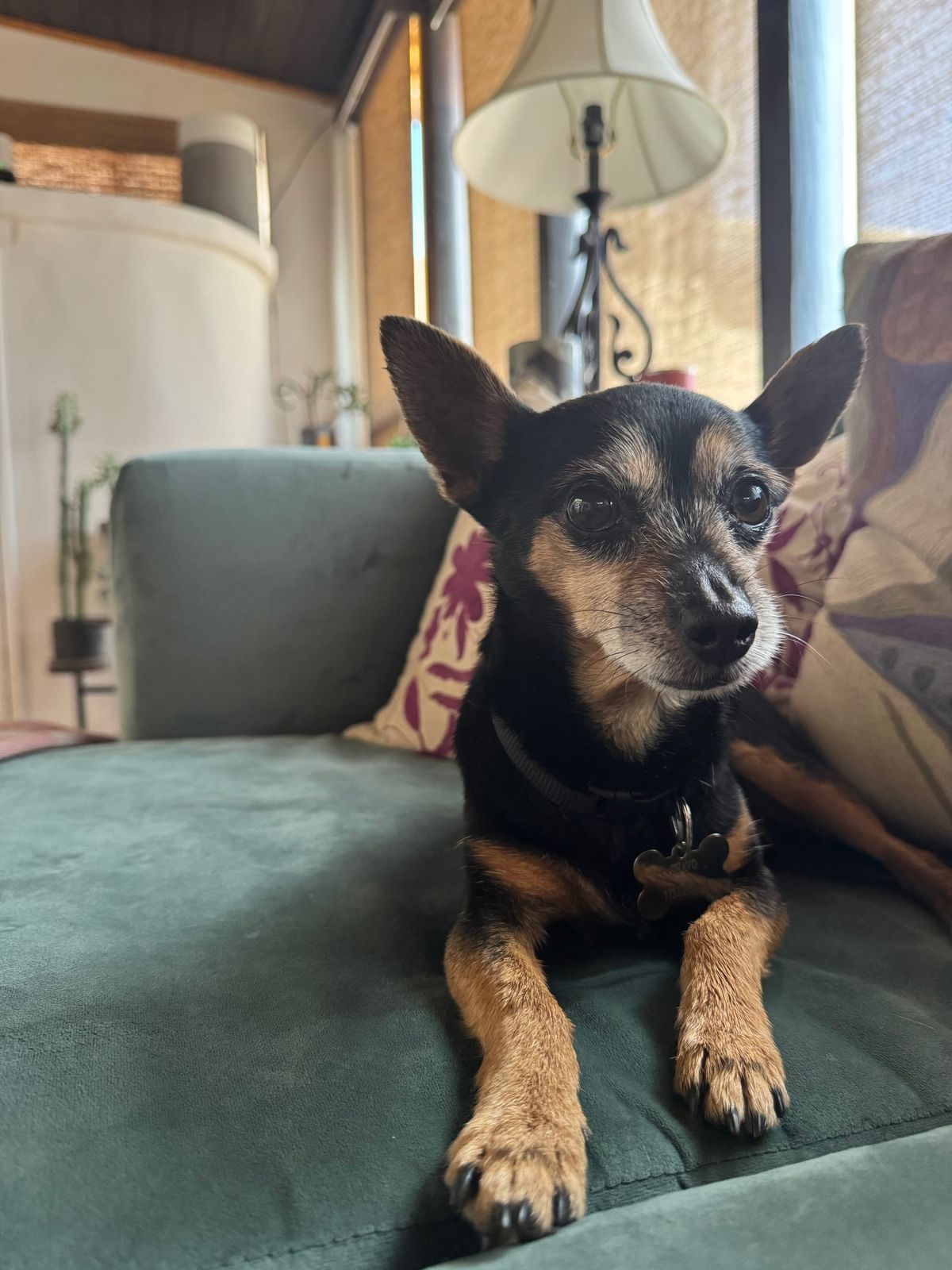
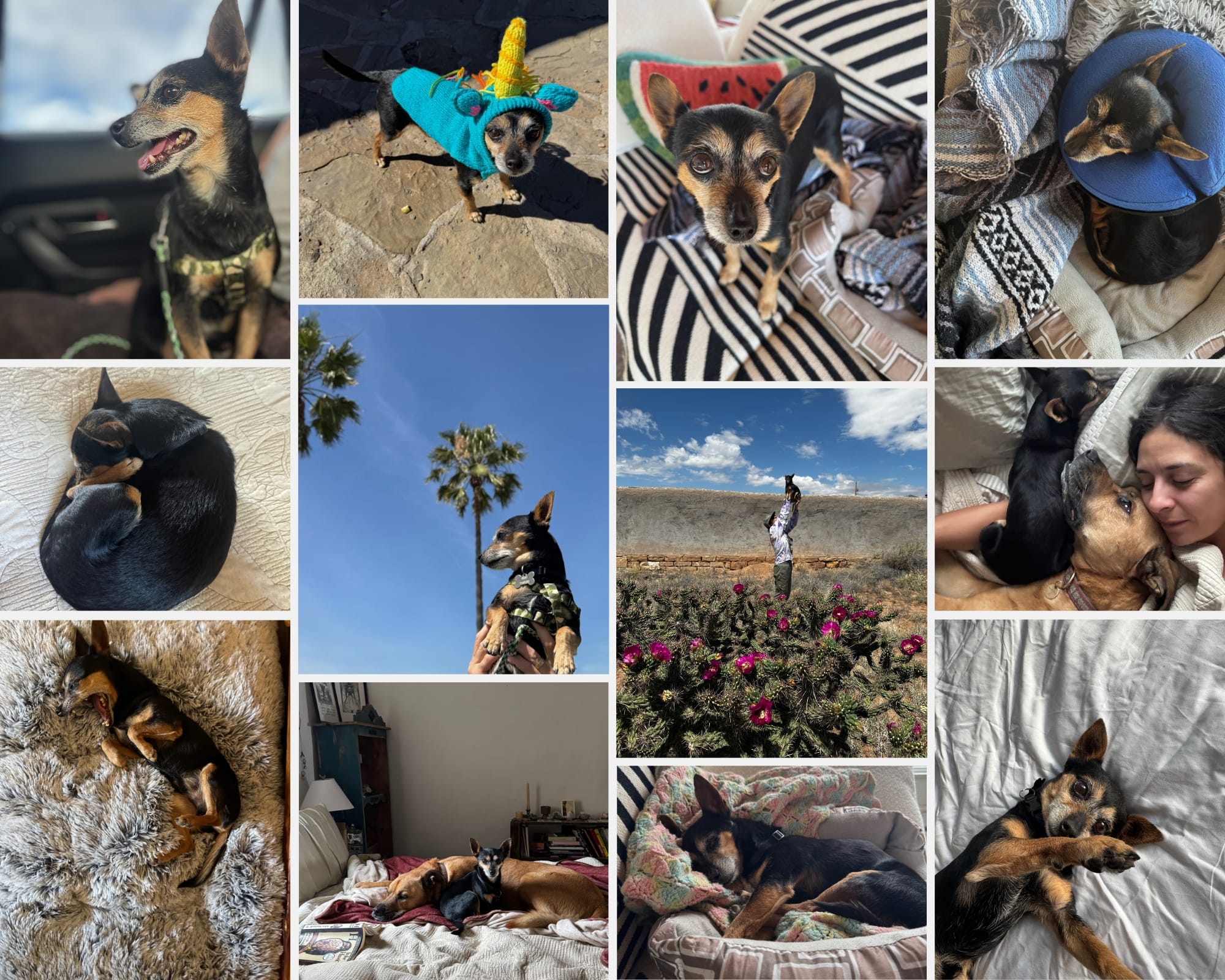
Chavo is the new small dog. He is old, though not so old as other old dogs I’ve known and loved, and the other afternoon he found a headless finch at the base of a black locust.
It hadn’t been there in the morning. The skull—nearby, though emphatically unattached—had already been picked clean. Hawk work, it seemed. They stake out feeders. Strike quickly, sometimes miss.
A few months back a sharp-shinned hawk struck the sunroom window, broke its neck on impact. Hard not to imagine, how swift and suddenly over that final flight. He was stunning, supremely dignified in death, eyes closed, head bowed, blue grey wings tucked tight at its sides. Kyle eased the feather-light corpse onto a shovel and walked it out to the fence line, with a heave launched him into one last flight, gave his body back to the earth. Reclamation happens fast around here.
And so again the other afternoon my friend who I married, gracious in the tasks I struggle with myself, gently eased what once was a finch onto a shovel and made his way toward the fence.
I forgot about the skull. Chavo did not.
The next morning, at sunrise, he showed me who he was. An extremely cool part of bringing an old dog into your home—getting to see who they are. Shelters tell you about the rule of threes: it takes three days for a rescued animal to decompress; three weeks to adjust to a new routine; three months to build trust and feel at home. Chavo had been with us just about three months when I opened the door to the courtyard and he made a beeline for the skull. I set off after him in my robe and crocs—you’re not supposed to run in crocs, and if you’re me two years ago, you’re not supposed to have crocs at all. They are hideous, unshapely, the most dangerous shoe on earth. They are also extremely comfortable and excellent by-the-door slip-ons. And anyway I’m not me two years ago. These days I try to make choices that suit the way I want to live. Which is why I was chasing a small old dog, who's maybe not so old as initially presumed, around the courtyard at sunrise, finch skull in his tiny yap, in crocs and a robe, tiddies flying all over the place, shrieking Chavito drop it, drop it, telling him god was watching, while he zoomed around the juniper kicking up tiny clouds of dust as the sky fired up for the day. It ended as quickly as it began, Chavo sprinting toward the door, where he sat on the mat, spat out the bones, and looked at me smiling. Awaiting a treat.
He knows the routine. Begins to feel at home in our home. I’m starting to feel that way too.
We’ve been in our century-old adobe in the foothills lining a scenic byway just about a year now. Put up new gutters, got a couple of rain barrels. Started clearing the field outside the courtyard of fireweed, russian thistle, saltlover, silverleaf nightshade, puncturevine and stork’s bill—all certified mother fuckers and invasive as hell—to make more room for the native grasses and wildflowers: purple aster and daisies, globemallow growing three feet high, firewheel, snakeweed, little bluestem, grama and ricegrass. I loved watching the birds last fall congregate among plants that have grown here for thousands of years, perched delicately on thin branches, fading stems, riding the breeze like they were born to do it.
Almost all living things die close to home.
If you’re going to put out the feeders and fresh water, drawn from the rain barrel.
If you’re going to prime the field for more native plants.
If you’re going to keep birds close, you’re going to see them die.
You learn to watch your step in summer around the crown of trees for fallen nestlings, to clean the crumbs from the stovetop and look for mouse holes along the perimeter of the old adobe, to hear the sound of a trap spring hard and fast on the neck of a small, hungry animal rooting around where it shouldn’t have been at 3am in the kitchen, and know immediately what happened, and what happens next. You learn to thank your friend who you married for doing the bulk of the deathwork around here—you understand this is, of course, the cost of rural living, of feeding birds, of having windows. You order window tape to mitigate bird strikes. Carry beetles back into the courtyard. Try to make peace with spiders. Some days it’s easier than others. I don’t know I’ll ever not feel my heart drop to see a small flightless body, settled in the dust. That probably just means it's working.
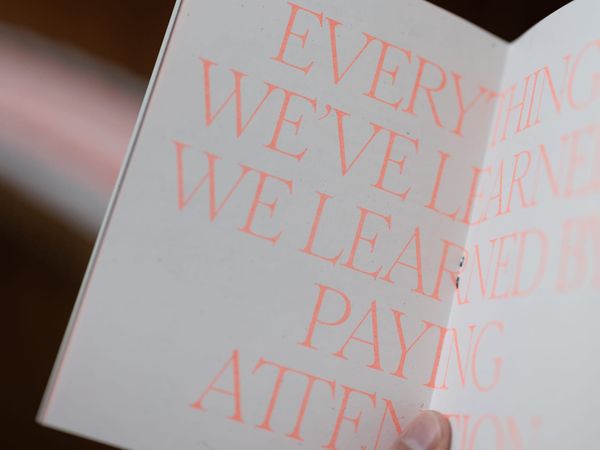
Extraordinary machine, the human heart. It has an endless capacity for love. I didn’t even know Chavo four months ago. Today I sat still on the ground for five minutes and let him lap up an ice cube from my hand to make sure he stayed hydrated. He’s not so great at drinking water, but he’s got other strengths, and a good personality. I love him more than jesus, bigger than sunrise. A whole new animal to care for! Like it’s the easiest thing in the world. Like we were born to do it. To take each other in and learn to understand, create routines and rituals around each other, to pour into the project of building trust, and making home. We don’t ever run out of love.

Anyway here’s a poem I wrote about the time I traveled through Sweden alone and the train I’d booked to Stockholm caught fire the station before I was to board, but no one was hurt and I figured it out, and read Franz Wright for the very first time. Thanks to Rob Mclennan for publishing in Tuesday Poems.
i got where i was going but not before i changed
“I’m writing to you
all the time”
—Franz Wright
you may be moved to discover on a train
to stockholm you hadn’t planned on—
the other one having burst into flames
the station before you boarded in malmö—
you actually quite enjoy a thing
you'd previously dismissed, for instance
the poetry of a dead drunk austrian,
yourself, black tea with bergamot.
confronting that you might consider
spiders, sparrows, meditation, surviving
surprise or a gesture, a ticket, an engine
ablaze, a world weary with trying, my god—
all this love you may have missed.